Eighteen voices, eighteen experiences
The eighteen texts developed during the workshop explored a wide range of subjects and perspectives, from family and generational conflicts, motherhood, identity, sexuality, and cultural expectations to political satire, femicide, and the legacy of war in Kosovo.
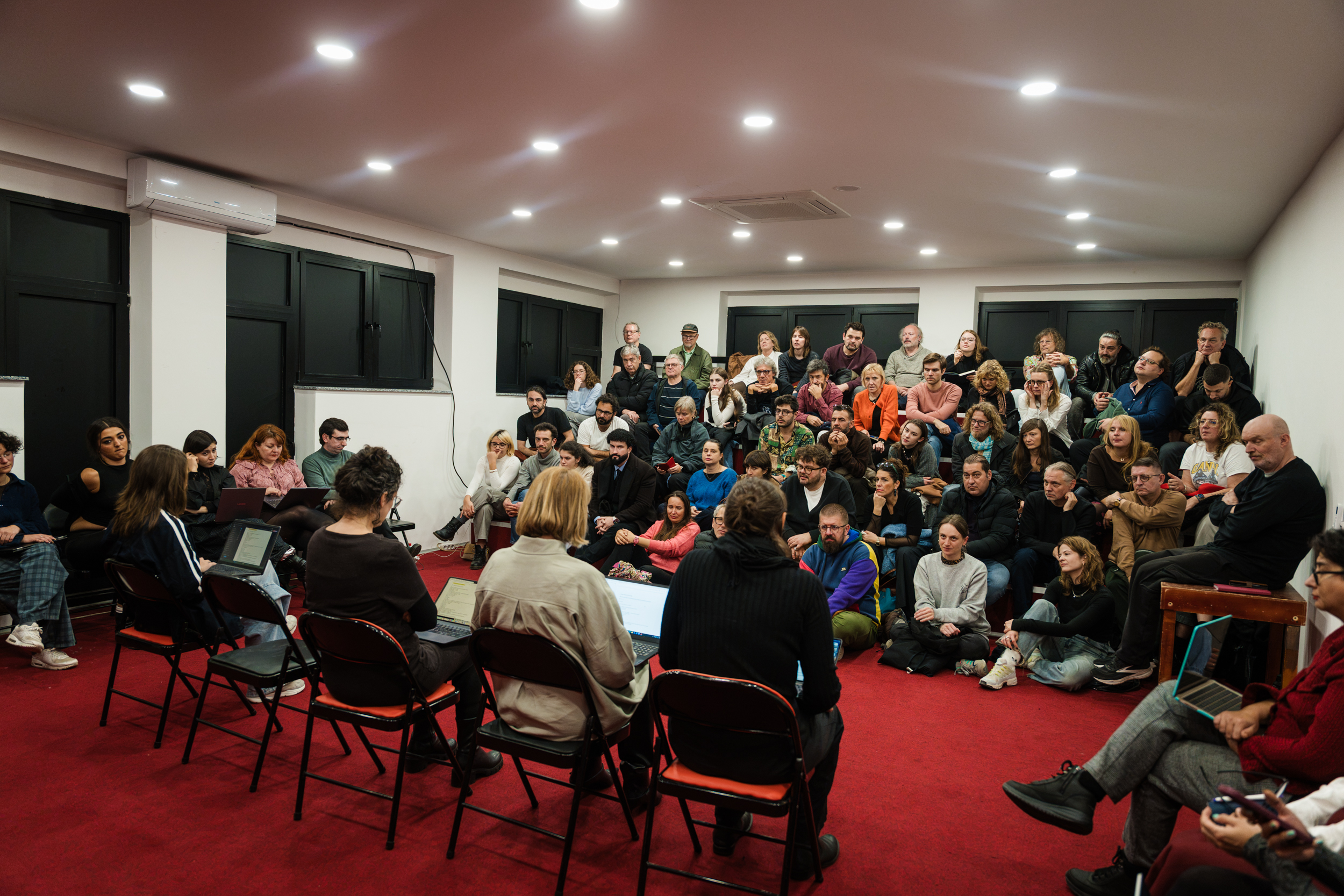
The texts were presented as works in progress on the final day of the workshop, giving participants the opportunity to experiment not only with writing but also with voice and performance. Reading and performing their texts in front of an audience of professional theatre makers brought the words to life, opening them up to new interpretations and sparking a wide range of emotions.
Bringing together artists from nine countries also meant bringing together different artistic backgrounds, cultural references, and understandings of theatre. The workshop became a shared space in which these perspectives could meet, challenge one another, and generate new ideas.
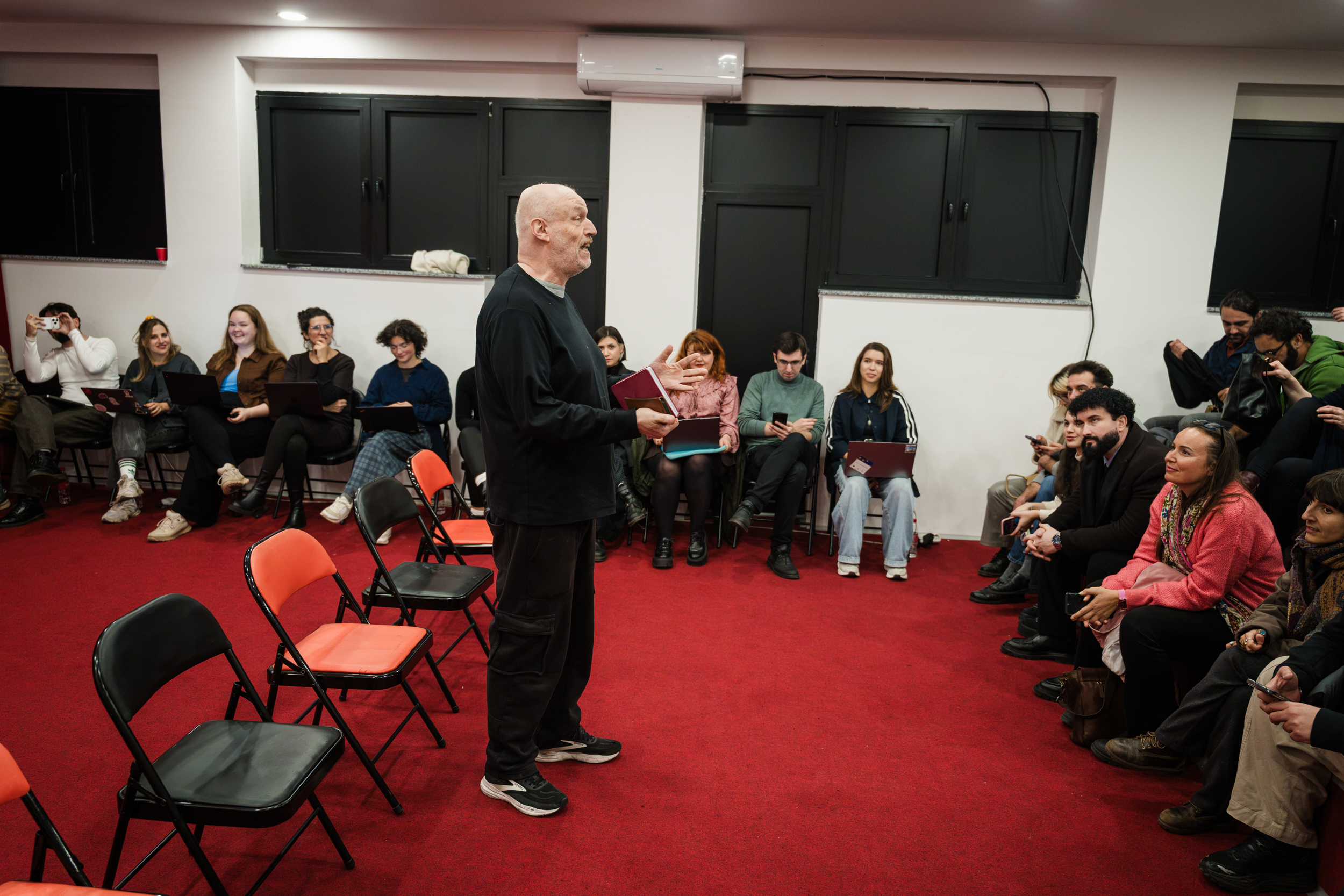
Working alongside Mark Ravenhill, participants engaged in a creative process that invited them to reconsider their approaches to writing, question their assumptions, and explore the possibilities of theatrical storytelling.
But what did they take away from these seven days? Which exercises stayed with them? What surprised them, challenged them, or changed the way they think about writing?
We invited the participants to reflect on their experiences in Prizren, sharing their thoughts on the creative process, their encounters with different perspectives, and the questions they will carry into their future work.
For Eli Krasniqi (Kosovo), joining the workshop meant stepping into an environment that initially felt unfamiliar:
“I had many doubts before signing up for the workshop, mainly because I still do not consider myself to be part of this milieu, despite my long engagement with writing and my more limited experience with publishing this type of work. I did not know what to expect. Nevertheless, the experience was unforgettable, not only because of the wonderful personality and pedagogy of Mark Ravenhill, from whom I learned a lot, but also because of the participants, with whom I became close.”
For Mariliis Peterson (Estonia), one of the most important lessons was the freedom to experiment without feeling the pressure to produce something polished or complete:
“One of my biggest takeaways has been realizing that writing doesn’t have to be polished or finished. You can simply write, experiment and have fun with it. And sometimes, that’s enough. I think it’s something I needed to hear.”
Peterson also reflected on the broader significance of the workshop and one particular insight shared by Ravenhill:
“The workshop was about more than just playwriting. It was about theatre and connecting with other theatre makers. It was about learning and relearning. For example, it was particularly meaningful for me when Mark said that theatre doesn’t have to be about conflict. Hearing that said out loud really healed something in me.”
For Codruța Cadar (Rumania), the workshop strengthened her trust in her own creative instincts:
“It helped me immensely in gaining confidence in my intuition and gave me a better understanding of my own writing process, practice and voice.”
For Elif Alp (Turkey), the encounter with playwrights from different countries and artistic backgrounds expanded her understanding of what was possible in her own work:
“I keep wanting to call the workshop and the Kosovo Theatre Showcase in Prizren an unforgettable experience, but I get stuck on the word experience. What I really want to say is that I left feeling empowered. I say empowered because working alongside such talented playwrights from all around the world made my own world feel bigger, in playwriting and in ways I’m still discovering. There was so much joy in the room.”
For Igor Tomeski (North Macedonia), the workshop also meant finding a place where his writing could be heard and welcomed:
“Coming from a country that still finds it challenging to provide openness to fresh writing voices that challenge the status quo, I am happy to say that at Qendra Multimedia, and with that, in the country of Kosovo, I found a safe space to showcase my writing.”
Marco Trotta (Italy) likewise pointed to the value of the group and of Ravenhill’s approach to leading it:
“The workshop with Mark Ravenhill was invaluable from many points of view. First and foremost, the group: a collection of professionals from all over the world, all driven by a desire to write and a constant willingness to offer feedback and contributions. Then there was Mark himself, who granted us immense freedom while providing a keen, sensitive perspective.”
Multiple participants highlighted that Ravenhill emphasised the importance of trusting the writing process and letting go of expectations.
For Deniz Giannoulis, one of the most rewarding moments came when the participants heard their texts performed aloud at the end of the week:
“One of the most rewarding moments was hearing the work aloud at the end of the week. A text that had existed only in my head and on the page suddenly had other voices, rhythms and possibilities. It reminded me how much theatre depends on the generosity of people willing to bring an unfinished idea to life.”
The workshop also gave Giannoulis the opportunity to move beyond initial ideas and begin developing a new play:
“I arrived with a few ideas and left with a new play in progress, new friendships, and a renewed desire to keep experimenting. Perhaps the best thing a writing workshop can give you is not certainty, but the courage to ask better questions.”
Beyond seven days
The workshop concluded on 8 November, but its conversations and creative explorations do not necessarily end there. Many participants hope this will not be the last time. Codruța Cadar wrote:
“I feel privileged to have been part of this experience, and I strongly encourage Qendra Multimedia to keep this tradition alive and organize many more visits by Mark Ravenhill to Kosovo.”
Marco Trotta shared the same wish, and expressed his gratitude to the organizers:
“I truly hope this workshop is held again; it is an incredible opportunity for any playwright. My thanks also go to the entire Qendra team for selecting us, supporting us, and guiding us through this intensive journey in their homeland.”
As part of the Kosovo Theatre Showcase 2026, Fake It, Baby, Fake It Until Death Tears Us Apart extended the festival’s central questions into a practical, collective writing process.
The participants left with new texts, ideas, friendships, and, perhaps most importantly, the confidence to keep experimenting.
An international playwrights' workshop with Mark Ravenhill | 2–8 November 2026 | Prizren, Kosovo
Organized by Qendra Multimedia as part of the Kosovo Theatre Showcase 2026, the seven-day workshop Fake It, Baby, Fake It Until Death Tears Us Apart brought together eighteen emerging playwrights, writers, and theatre-makers from nine different countries: Turkey, Romania, Greece, Italy, Kosovo, Estonia, Albania, Germany, and North Macedonia.
The workshop continues Qendra Multimedia's collaboration with British playwright Mark Ravenhill, following previous international playwriting workshops held in Tirana 2024 and in Prishtina and Skopje 2025.
For Mark Ravenhill, returning to Kosovo is motivated by personal connection as much as by artistic curiosity:
“I hope to create a small spark amongst new playwrights which will burn in the years ahead. And it’s great to learn of new developments from theatre colleagues in other countries.”
The workshop was part of a special edition of the 9th Kosovo Theatre Showcase. This year, the Showcase took the form of an international theatre conference, placing greater emphasis on discursive exchange and dialogue among its invited guests. It complemented the editions of the previous years that were simultaneously held in Tirana (2024) and Skopje (2025) and Prishtina.
Through its ongoing experimentation with new formats, the Showcase expands its approach to theatre and brings international guests into dialogue with the discourses shaping the Balkan region.
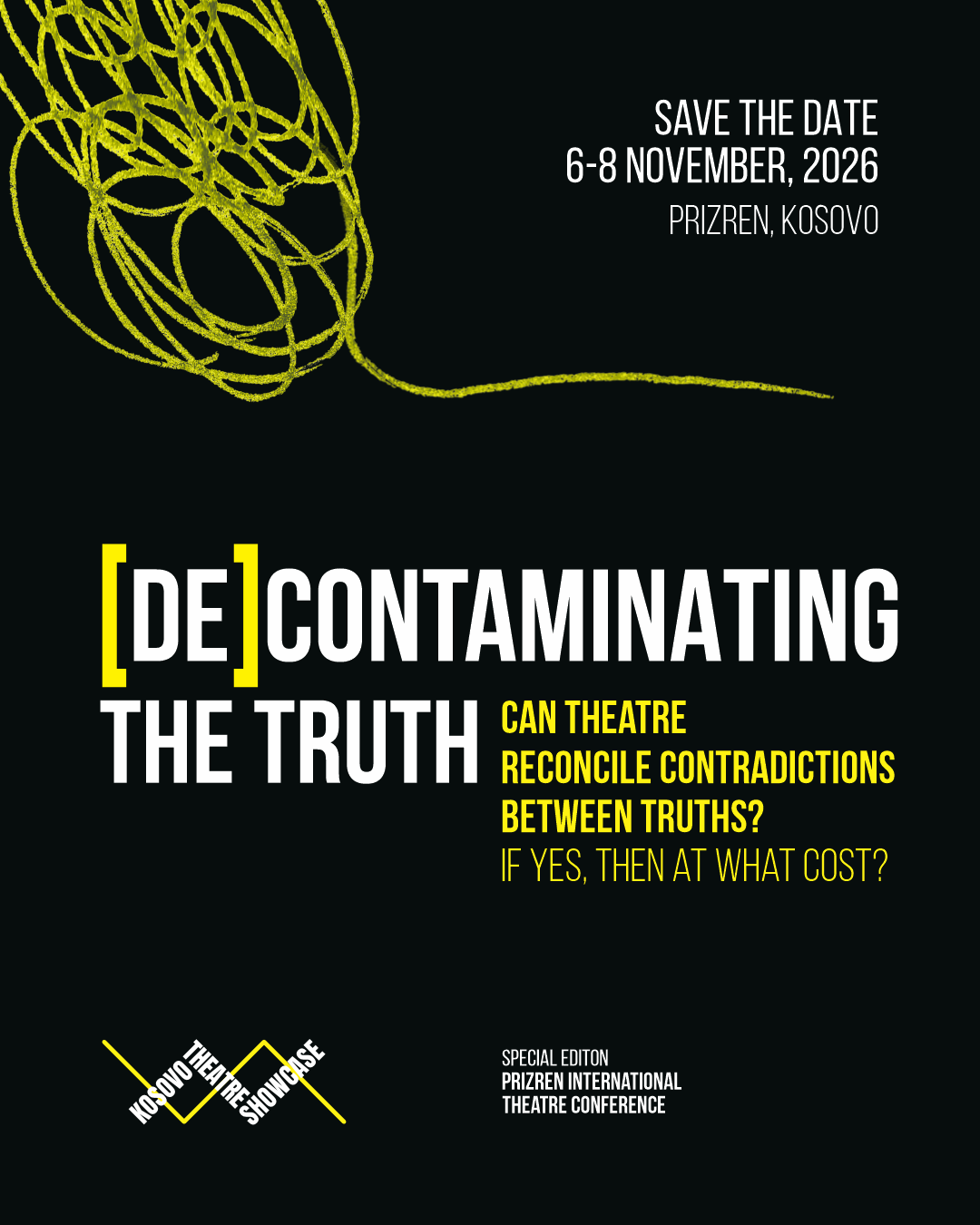
This year’s edition was dedicated to the theme [DE]CONTAMINATING THE TRUTH: Can Theatre Reconcile the Contradictions Between Truths? If Yes, Then at What Cost?
Through performances, international discussions, and artistic encounters, the Showcase invited theatre practitioners and audiences to question the ways truth is constructed, communicated, contested, and represented.
Within this broader context, the workshop offered eighteen participants an opportunity to approach the topic Fake It, Baby, Fake It Until Death Tears Us Apart from the position of artistic creation as playwrights.
Over a course of seven days, participants playfully, provocatively, and unconventionally explored writing plays. Through practical writing exercises, individual experimentation, group reflections, and discussions, they were encouraged to challenge familiar narrative structures and investigate the boundaries between reality and fiction.
Although the sessions were conducted in English, participants were encouraged to write in any combination of languages that best suited their creative expression, allowing different linguistic and cultural perspectives to become part of the collective process.